
Author: Jesús Carlos Lazcano Arce
Acesse: https://www.jstor.org/content/oa_chapter_edited/jj.46089972.10?seq=1
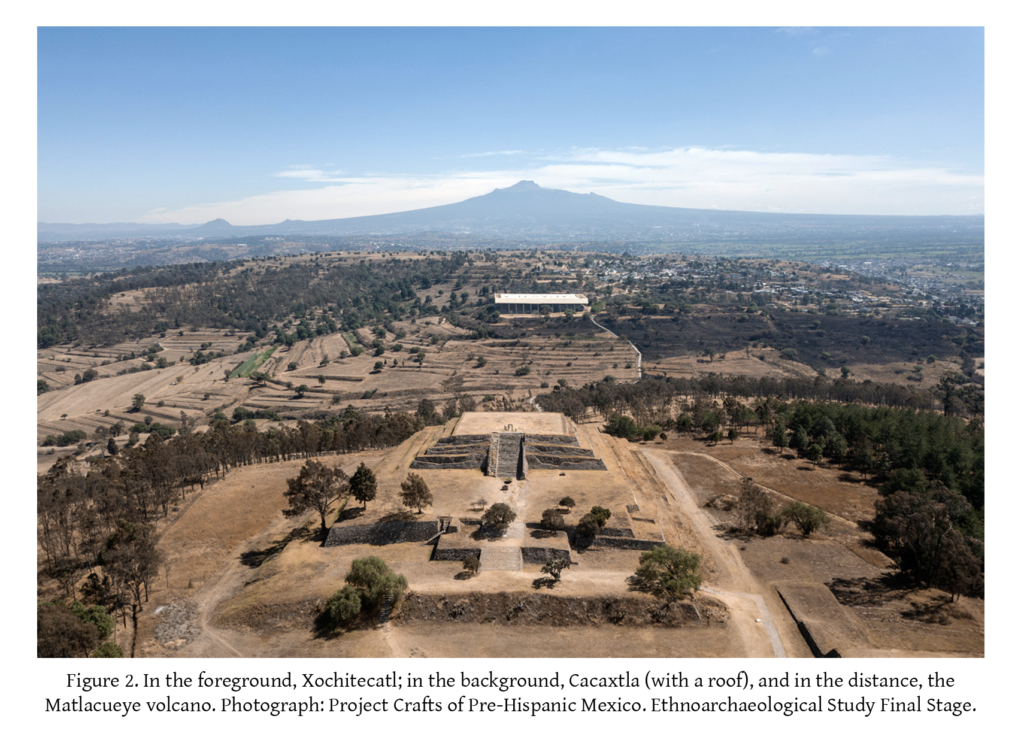
Abstract In the 1970s, three archaeological granaries or barns, locally called cuexcomates, were found in the residentialadministrative area known as the Great Basement of the Cacaxtla archaeological site. Another was found in 2011, associated with residential units from the Epiclassic period (650–950). This discovery was made through the research project titled ‘Man and His Resources in the Puebla-Tlaxcala Valley’. The presence of cuexcomates in different hierarchical and social contexts suggests they held a unique importance, whether as elements of state or community use, but linked in their production to the peasant sector. This text accounts for the ethnoarchaeological study that has been carried out regarding the productive activities of the inhabitants of the Xochitecatl-Cacaxtla archaeological site, a pre-Hispanic settlement located in the state of Tlaxcala, Mexico. The project titled ‘Trades of Pre-Hispanic Mexico: An Ethnoarchaeological Study’ has allowed the identification of the productive processes necessary for the creation of the cuexcomates which, both now and in their pre-Hispanic stage, served to store corn grains, the main crop in the diet of the ancient and current inhabitants of Mexico. Their contemporary production implies that ancestral and millennial knowledge is still maintained and should not be lost.